
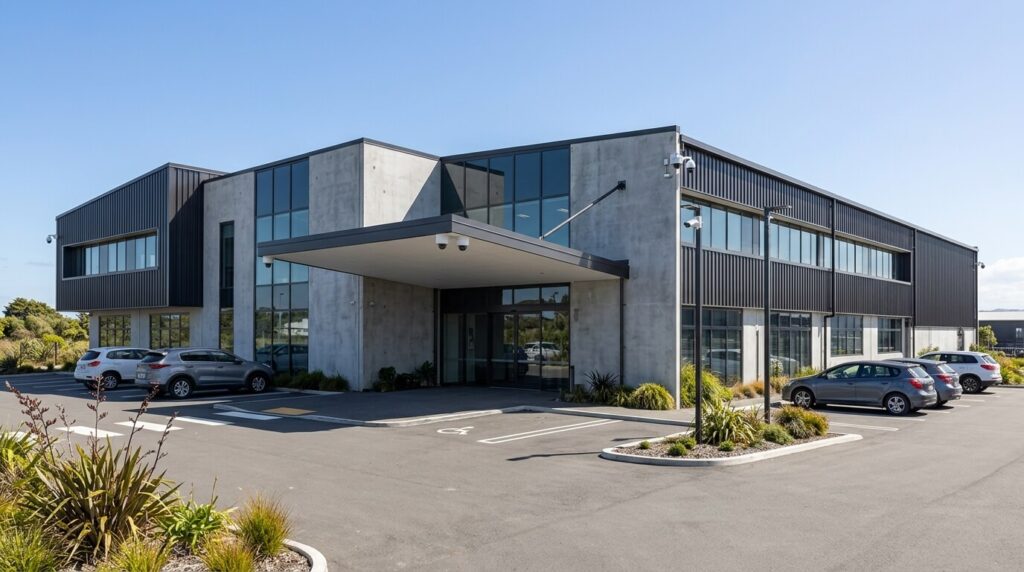
Installing CCTV for your business involves more than choosing a few security cameras and mounting them around your property. A well-planned CCTV system should provide the right coverage, image quality, recording capacity and connectivity for your specific environment.
Whether you operate an office, warehouse, industrial facility, farm or commercial property, there are several factors to consider before investing in CCTV installation for your business.
Network Tech Ltd provides professional CCTV and network solutions for businesses across Hawke’s Bay, helping clients design and install surveillance systems suited to their site and operational requirements.
Why Is CCTV Important for Businesses?
A properly designed CCTV system can provide greater visibility across your property and help businesses monitor important areas.
Depending on your requirements, business security cameras can help you:
- Monitor entrances and exits
- Deter unauthorised access
- Monitor car parks and loading areas
- Protect equipment, stock and other assets
- Keep an eye on large or difficult-to-access areas
- Review recorded footage when an incident occurs
- Improve visibility around your workplace
CCTV can form an important part of a wider business security strategy, particularly for commercial and industrial properties.
1. Identify What You Need Your CCTV System to Monitor
Before selecting cameras, identify the areas where surveillance is most important. The size and layout of your property will determine how many cameras you need and where they should be positioned.
Common areas to consider include:
- Main entrances and exits
- Reception and customer areas
- Car parks
- Loading and delivery areas
- Warehouses and storage areas
- Building perimeters
- Equipment and high-value asset locations
- Restricted-access areas
Thinking about these areas before installation can help minimise blind spots and ensure your CCTV system provides useful coverage.
2. Consider the Size and Layout of Your Property
A small office will have very different CCTV requirements from a large warehouse or industrial site.
When planning CCTV installation for business, consider the number of buildings, distance between camera locations, indoor and outdoor areas, and where recording and network equipment will be installed.
You should also consider whether cameras need to cover large open spaces, narrow access points or areas located a significant distance from the main building.
A professional assessment can help determine suitable camera locations and the infrastructure required to connect them.
3. Choose the Right CCTV Cameras
Different areas of your property may require different types of cameras. Choosing equipment based on the environment can help ensure useful footage in a range of conditions.
Indoor Cameras
Indoor cameras can be suitable for offices, reception areas, warehouses, corridors and other internal spaces.
Outdoor Cameras
Outdoor cameras need to be suitable for changing weather and lighting conditions. They can be used to monitor entrances, car parks, building perimeters and other external areas.
Wide-Angle Cameras
Wide-angle cameras can help cover larger areas where a broader field of view is required.
Specialist Cameras
Depending on your site and security objectives, you may also need cameras with features such as night vision, higher image resolution or motion detection.
The right combination of cameras depends on what you need to monitor rather than simply selecting the most advanced equipment available.
4. Consider Lighting and Image Quality
Lighting can have a significant impact on CCTV footage. A camera that produces clear images during the day may perform differently at night or in areas with limited lighting.
When planning your system, consider:
- Natural daylight
- Low-light areas
- Night-time surveillance
- Glare and reflections
- Camera positioning
- The level of detail required
For example, an entrance may require clear identification of people entering a building, while a large warehouse may require broader coverage of general activity.
The goal is to select and position cameras appropriately for each location.
5. Decide How Much Footage You Need to Record
Recording and storage requirements should also be considered before installing a CCTV system.
The amount of storage you need can depend on:
- Number of cameras
- Camera resolution
- Recording frequency
- Number of hours recorded each day
- Required footage retention
- Event-based versus continuous recording
Businesses should consider how often recorded footage may need to be reviewed and how long it needs to remain available.
A CCTV professional can help you select an appropriate recording and storage configuration based on your requirements.
6. Consider Remote CCTV Monitoring
Many modern commercial CCTV systems provide remote viewing capabilities, allowing authorised users to access cameras from a computer or mobile device.
Remote access can be useful for businesses that need to:
- Check their premises outside normal working hours
- Monitor multiple areas or locations
- Review incidents remotely
- Check activity without being physically on site
Remote monitoring requirements should be considered during the initial system design so the appropriate network and equipment can be configured.
7. Don’t Overlook Your Network Infrastructure
Modern CCTV systems often rely on network infrastructure to transmit video between cameras, recording equipment and authorised viewing devices.
This makes your network infrastructure an important part of CCTV planning.
Depending on your site, you may need:
- Structured data cabling
- Fibre optic connections
- Network switches
- Wireless connectivity
- Suitable network capacity
- Reliable connections between cameras and recording equipment
Network Tech Ltd has experience across both CCTV installation and network infrastructure, allowing us to consider the wider connectivity requirements of your surveillance system.
For businesses requiring additional network infrastructure, we also provide structured cabling, fibre optic installation and wireless networking solutions.
8. Plan for Future Expansion
Your CCTV requirements may change as your business grows. You may add buildings, expand warehouse space, increase the number of employees or require additional surveillance in the future.
Planning for expansion from the beginning can make it easier to add cameras and storage later.
Consider whether your system can accommodate:
- Additional cameras
- New buildings or work areas
- Increased recording requirements
- Network expansion
- Additional monitoring locations
A scalable system can provide greater flexibility as your business requirements change.
Professional CCTV Installation vs DIY
Some small businesses may consider installing CCTV themselves, particularly where only basic monitoring is required. However, larger or more complex sites can benefit from professional planning and installation.
Professional installation can be particularly useful for:
- Large commercial properties
- Industrial facilities
- Warehouses
- Multi-building sites
- Properties with extensive outdoor areas
- Systems requiring network integration
- Sites with complex camera positioning requirements
Professional installation can help ensure cameras are positioned appropriately, network connections are configured correctly and the overall system works as intended.
CCTV Installation for Businesses in Hawke’s Bay
Network Tech Ltd provides CCTV installation in Hawke’s Bay for businesses and organisations across a range of industries.
Our experience includes solutions for:
- Commercial offices
- Industrial facilities
- Warehouses
- Agricultural properties
- Packhouses
- Educational facilities
- Government sites
As a networking and communications specialist, we can also consider how your CCTV system connects with your wider business infrastructure. This can include structured cabling, fibre optic connections and wireless networking where appropriate.
Our approach is to understand your requirements first and then recommend a practical CCTV solution suited to your property.
Planning CCTV Installation for Your Business?
The right CCTV system starts with understanding your property, security requirements and network infrastructure.
Network Tech Ltd provides professional CCTV installation for businesses across Hawke’s Bay, with solutions designed around your site and operational needs. Our team can help with CCTV system planning, installation and network integration.
Contact Network Tech Ltd today to discuss your CCTV requirements.
Frequently Asked Questions
How many CCTV cameras does a business need?
The number of cameras depends on the size and layout of your property, the areas requiring surveillance and your specific security objectives. A site assessment can help determine appropriate camera coverage.
What type of CCTV system is best for a business?
The right system depends on factors such as property size, lighting conditions, camera locations, recording requirements and whether remote monitoring is required. A professional recommendation can help you choose equipment suited to your environment.
Can business CCTV cameras be viewed remotely?
Many modern CCTV systems support remote viewing, allowing authorised users to view live or recorded footage from compatible computers and mobile devices.
Does CCTV require network cabling?
Network-connected CCTV systems may use structured cabling, fibre optic connections or wireless connectivity depending on the property and system requirements.
How much does CCTV installation for a business cost?
The cost depends on factors such as the number and type of cameras, property size, cabling requirements, recording and storage capacity, and installation complexity. Network Tech Ltd can assess your requirements and recommend a suitable solution.